Predicting the future by re-imagining the present
Convening the multiple-helix for problem-solving of SHARED environmental challenges FACING the baltic sea region
A Conversation with Lithuanian Filmmaker Agnė Marcinkevičiūtė
The ocean doesn’t begin at the shoreline. It begins in our rivers, our cities, our farms, and in the everyday choices we make..... Read More
4/23/20263 min read
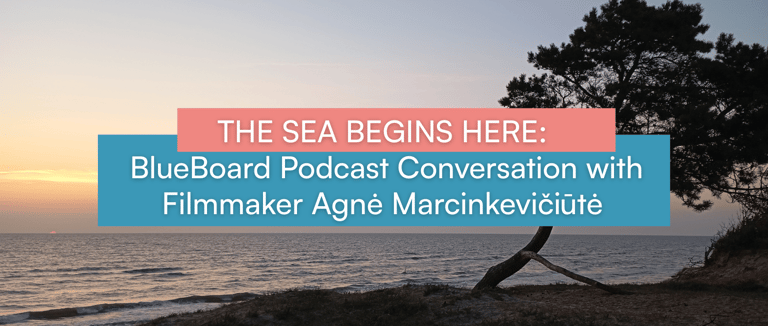
A Sea Under Pressure
The Baltic Sea is one of the most environmentally stressed seas in the world. One of the biggest threats it faces is Eutrophication, a process caused by excess nutrients entering the sea from agriculture, wastewater, and other human activities. These nutrients fuel massive algae blooms, which consume oxygen as they decompose, creating so-called “dead zones” where marine life struggles to survive. In fact, some of these oxygen-depleted areas are so large that, combined, they cover a region larger than Lithuania itself. For filmaker Agne Marcinkevičiūtė, the story of the Baltic Sea is not just about environmental decline. It is also about people: their choices, their communities, and their relationship with nature.
Following a Journey Around the Baltic
A central part of the documentary follows a group of Lithuanian activists who travelled around the Baltic Sea in 2024. During their journey, they met local communities, scientists, and environmental groups working to protect the sea. The film captures conversations and stories from several Baltic countries, including Lithuania, Finland, Sweden, Poland, and Estonia. By bringing these voices together, the project highlights how protecting the sea is a shared responsibility across borders. For Marcinkevičiūtė, these human stories are essential. They show that environmental change does not only come from policy or scientific research, it also comes from communities working together.
When Art Meets Science
Rather than creating a purely informational environmental film, Marcinkevičiūtė chose a storytelling approach that blends scientific knowledge with personal experiences. She believes this approach helps audiences connect more deeply with environmental issues.
“When science and art meet, something powerful happens. Facts become experiences, and data becomes emotion.”
Standing by the sea can create that perspective. It reminds us that we are not separate from nature, but part of a larger, interconnected system. Through the film, Marcinkevičiūtė hopes viewers will feel that connection before they begin to think about the scientific facts. While the documentary explores environmental challenges, it also highlights positive stories that show progress is possible. One example involves DDT, a pesticide widely used in agriculture before the 1970s. Its toxic effects caused severe damage to Baltic wildlife, including seal populations. After the chemical was banned across Europe, seal populations slowly began to recover. For Marcinkevičiūtė, this is a reminder that collective decisions can help restore ecosystems.
Stories like these offer an important counterbalance to environmental despair, showing that change can happen when communities and governments work together. Marcinkevičiūtė hopes The Sea Begins Here will spark conversations beyond the screen. Alongside the film, she plans to organise discussions and workshops that bring together scientists, activists, and local communities.The aim is to encourage people to reflect on their everyday habits, from consumption and waste to how they treat water and nature. If audiences leave the film thinking differently about their relationship with the sea, then the project will have achieved its purpose.
The Sea Starts With Us
At its core, The Sea Begins Here carries a simple but powerful message: the health of the ocean is connected to the choices we make every day. Even small actions can ripple outward, eventually reaching the sea. And as the film reminds us, the sea does not begin at the shore. It begins with us.
Agnė Marcinkevičiūtė is director/producer associated with the “Save the Baltic Sea” initiative,
VšĮ „Už švarią Lietuvą“ (Kaunas, Lithuania)
Blue Board Podcasts are sponsored by the Blue-LightS project around four topics:
Ocean and freshwater education
Sustainability and environmental awareness
Community and stakeholder engagement
Real-world initiatives (e.g. rivers, marine protection)
Blue LightS is one of the three sister projects to the EU Mission Ocean Initiative, "Save Our Oceans and Waters by 2030
Connect
Collaborate
info@BalticLivingLab.org
© 2024. All rights reserved.
Views and opinions expressed are those of the author(s) only and do not necessarily reflect those of the European Union or the European Commission.


The Baltic Living Lab is an Estonian NGO
MTU Registry Number 80646101
PIC 881723405 * OID E10395113