Predicting the future by re-imagining the present
Convening the multiple-helix for problem-solving of SHARED environmental challenges FACING the baltic sea region
How Students Co-Design and Build Restorative Biodiversity Artificial Reefs
FISHOMES.com - A Blue School innovation supported by the EU Horizon SHORE project in support of the EU Mission Ocean "Restore our Oceans and Waters by 2030..... Read More
12/13/20253 min read
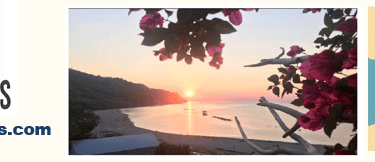
Along the dramatic cliffs of Monte San Bartolo on Italy’s Adriatic coast, a group of young “Ambassadors of Science” is quietly reshaping the future of marine restoration. Their project, FISHOMES, transforms schools into ocean-innovation labs where students design and build miniature artificial reefs—habitats that help restore biodiversity, slow coastal erosion, and support sustainable fisheries.
Born from a two-year STEM program involving primary and secondary students in Pesaro, in collaboration with Liceo Scientifico G. Marconi’s environmental energy laboratory, FISHOMES is a remarkable example of what happens when hands-on learning becomes hands-on conservation. The project has been recognized by the European Union through the Horizon SHORE initiative and the European Blue School network, which aims to empower young people to act for healthy oceans.
A Simple Idea With Transformative Impact
The heart of FISHOMES is wonderfully straightforward: students build small concrete reef structures—“mini-bay balls”—that mimic natural habitats. These “houses for fish,” as described in the project slides, create micro-refuges for eggs and juveniles, offer protection from predators, and serve as settlement surfaces for barnacles, mussels, oysters, sponges, and other benthic organisms. Over time, these organisms stabilize and strengthen the structure, producing a self-reinforcing cycle of colonization and biodiversity enhancement (pages 85–86). Students learn that the longer a FISHOMES structure remains underwater, the more marine life it attracts, becoming a living oasis beneath the waves. The process becomes Learning by Doing: Where STEM Meets the Sea.
FISHOMES is more than a restoration effort—it is a full educational journey. As the didactic section of the presentation explains, students develop competencies in: Marine Ecology, Naturalistic Engineering, Technical Drawing, Hydrodynamics and hydrostatic forces, Material Science, Habitat design and species needs. From brainstorming to scale modeling to underwater deployment, the entire cycle is student-led. The planning even includes evaluating structural stability, hole patterns for water flow, protection from predators, and how shape influences ecological function. This is open schooling in action: students apply real science to real environmental problems and contribute data through periodic biodiversity monitoring, publishing results on project webpages with photographs and underwater videos.
Why These Little Reef Balls Matter
Artificial reefs — defined in the project as any submerged structure designed to enhance marine life — serve multiple roles:
1. Biodiversity Regeneration - Fishomes structures quickly become nurseries and shelters for fish and crustaceans, encouraging the return of species to degraded areas.
2. Coastal Protection - By altering water flow, reef balls dissipate wave energy and help reduce coastal erosion — an increasingly urgent need in European waters
3. Climate and Ecosystem Resilience - Sessile organisms such as oysters and algae biostabilize the structures over time, creating long-lasting habitats that strengthen ecosystem functioning.
4. Sustainable Fisheries Support - By providing new habitat, the project enhances local fish stocks and supports responsible small-scale fisheries, aligning with EU biodiversity and sustainability goals.
A Blueprint for Blue Schools Everywhere
FISHOMES embodies the vision of the EU Mission “Restore Our Oceans and Waters” and the Blue Parks initiative, enabling schools to contribute to a coherent network of protected and restored marine environments. What makes this initiative especially replicable is its simplicity:
Low-cost materials
Scalable design
Adaptable to different coastal conditions
Strong educational, ecological, and community impact
Each class builds its own Fishomes structure at 1:5 scale, deploys it at sea, retrieves it after several months, and analyzes the organisms that have colonized it. Students witness, firsthand, the birth of new ecosystems— and their role in stewarding them.
A Student-Led Vision of Hope for the Sea
In an era when the health of our oceans can feel overwhelming, FISHOMES offers a different kind of story: one of empowerment, creativity, and collaboration. These young citizens of Pesaro show that restoring marine biodiversity does not always require big ships, large budgets, or high-tech labs. Sometimes, it begins with a classroom, a concrete mold, and the curiosity of a child who wonders:
“What if we built a home for fish?” Schools, communities, and ocean educators across Europe—and beyond—now have a model they can adopt, adapt, and grow into living networks of coastal restoration.
Source: Fishomes.com blog -


Connect
Collaborate
info@BalticLivingLab.org
© 2024. All rights reserved.
Views and opinions expressed are those of the author(s) only and do not necessarily reflect those of the European Union or the European Commission.


The Baltic Living Lab is an Estonian NGO
MTU Registry Number 80646101
PIC 881723405 * OID E10395113