Predicting the future by re-imagining the present
Convening the multiple-helix for problem-solving of SHARED environmental challenges FACING the baltic sea region

Stockholm Archipelago - sharp decline in fish abundance
Researchers explore authorities’ failure to restrict increasingly technologically-advanced fishing practices to sustainable levels..... Read More
1/15/20262 min read
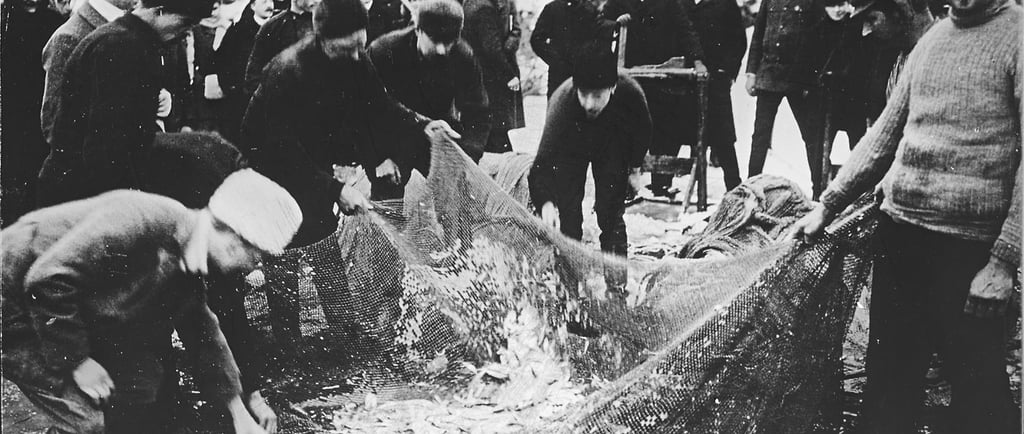
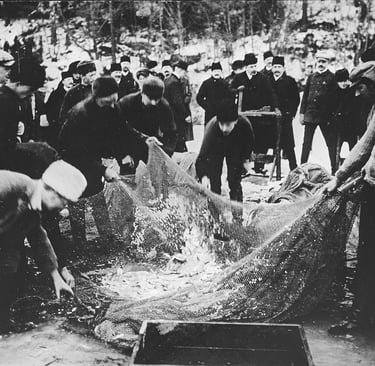
A new scientific publication from the Stockholm University Baltic Sea Centre analyses the history of fishing in the Stockholm Archipelago. The authors conclude that the sharp decline in fish abundance over the past half-century is unprecedented and cannot be explained by natural variation. Nor can the current situation be attributed to seals, cormorants or sticklebacks. Instead, the primary cause is the authorities’ failure to restrict increasingly technologically advanced fishing practices to sustainable levels. The herring stock in the Baltic Sea has decreased by 80 percent since the 1950s. This extreme decline is not the result of a long-term development, but rather a sudden change following a long period of relative stability and resilience. This fact exposes the routine explanation of declines of fish stocks in terms of an inevitable ‘tragedy of the commons’.
“Quite contrary, our study shows that fishing was maintained in the same area over centuries, supported by what can be described as a true market control without governmental interventions. This historical fishing was part of a true market, where the fishermen acted as an opportunistic predator, abandoning specific target species at low abundance and fishing on present surpluses”. The authors found evidence of a remarkably continuous high level of fish supply throughout most of the nineteenth and twentieth centuries, despite variation in fish recruitment, high abundance of mammal predators and high fishing intensities.
Restrictions are needed
The sudden decline in the herring stock needs to be understood in the context of rapid change of ecosystem functioning, fishing patterns and extraction level, the authors write. The economic and technological settings for the present industrial fishing in the Baltic Sea are fundamentally different from how they were before. Fewer, larger and more efficient fishing vessels, together with the privatisation of fishing rights and governmental subsidies, seems to have altered the very structure of how fish stocks are exploited.
“The fishing effort has changed in time and space to, for instance, pinpoint shoals of fish at overwintering sites. The development has also promoted the change in resource utilisation from the former opportunistic strategy of increasing fishing effort at high fish abundances to a steadfast extraction of biomass uncoupled to natural variations in fish stocks and kept at elevated levels due to subsidies such as tax exemption on fuels.”
The recent development of the fishing industry and its consequences for the entire Baltic ecosystem lie far from present promises of increasing the sustainability of resource extraction in Swedish seas. On the contrary, the recent decline of the herring in light of the long history of resilient populations outlined here, underlines the unsustainability of contemporary fisheries management and technological advancements in the Baltic Sea.” While a return to past fisheries practices is clearly not possible, some lessons can be learned – such as periodic abandonment of dwindling or depleted stocks rather than continued fishing reliant on economic support, the authors conclude.
Text: Annika Tidlund
Winter fishing in the Stockholm archipelago at the end of the 19th century.
Photo: National Museum of Science and Technology/ unknown photographer
Connect
Collaborate
info@BalticLivingLab.org
© 2024. All rights reserved.
Views and opinions expressed are those of the author(s) only and do not necessarily reflect those of the European Union or the European Commission.


The Baltic Living Lab is an Estonian NGO
MTU Registry Number 80646101
PIC 881723405 * OID E10395113